
Savoy Executive guide
Choosing a chauffeur vehicle for passengers and luggage
Compare representative chauffeur vehicle classes using the passenger count, luggage type and space the journey genuinely requires.
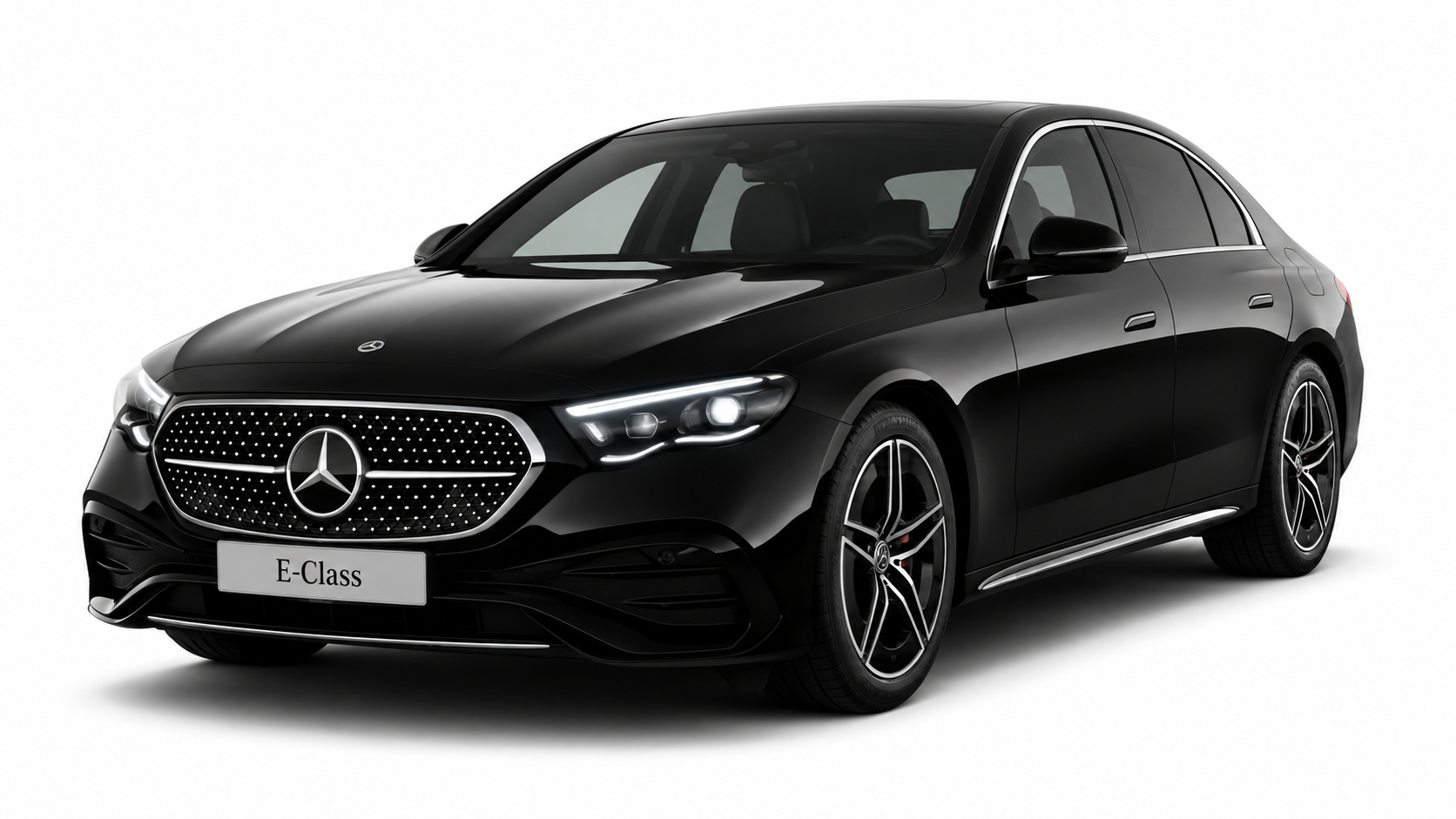
Choosing a chauffeur vehicle is mainly a question of suitability. Start with every person travelling, then consider the number, size and shape of the bags or equipment accompanying them. Savoy Executive presents representative vehicle classes with published passenger and standard-suitcase guidance so customers can compare the practical options before the booking form confirms what is available. A displayed make or model is always representative and supplied on an “or equivalent” basis.
Start with the whole travelling party
Count every passenger who will occupy a seat, including children. Do not select a saloon simply because the group is within the headline passenger limit: the passengers and their belongings must work together. A party of three with hand luggage has a different space requirement from three people carrying several large cases.
For a return journey, check the numbers again for the return leg. Colleagues, family members or luggage may join or leave the party, so an outward choice is not automatically right for the later movement.
Describe luggage realistically
The website uses standard check-in bags as a common comparison. Cabin cases, garment bags, pushchairs, wheelchairs, golf bags, musical instruments and presentation equipment can use space very differently. Count the standard cases requested by the form, then tell Customer Care about anything bulky, fragile or unusually shaped before travel.
Folding an item or placing small bags at passengers’ feet should not be assumed. Clear information allows the requirement to be considered before the journey rather than at the pickup.
Compare the representative classes
Essential, Executive and First Class are saloon choices for up to three passengers with the current published guidance of two standard check-in bags. Essential XL provides an SUV or MPV option for up to four passengers and four standard check-in bags. Group XL offers the highest published capacity: up to eight passengers and six standard check-in bags.
Those figures are guidance for comparing classes, not a promise that every combination of people and possessions will fit. The booking form remains the place to see current class availability for the journey entered.
Presentation and space are separate decisions
A customer may prefer Executive or First Class for the presentation of a business or private journey, but class positioning does not remove the need to check capacity. Equally, choosing a larger vehicle for luggage does not necessarily mean the journey requires a premium saloon. First decide what must fit safely and comfortably; then compare the service and presentation appropriate to the occasion.
Check every leg before confirming
Read the pickup, destination, date, time, passenger count, luggage count and selected class together. Airport journeys deserve particular care because returning passengers often carry more luggage than they took with them. If the form does not describe the requirement adequately, use the enquiry route and list the items clearly.
Allow for children, assistance and specialist items
Children count as passengers and may travel with pushchairs, child seats or additional bags. Mobility aids, folding wheelchairs and medical equipment also need to be described rather than treated as ordinary luggage. The right class depends on the complete requirement, including anything that must remain readily accessible during the journey.
Do not rely on a photograph to judge usable space. A vehicle image explains the representative class and presentation, while the published guidance and a clear description of unusual items are the practical basis for review.
Consider the character of the pickup
An airport arrival, business meeting, wedding and group departure can place different demands on the same number of passengers. At an airport, a party may have its full travel luggage; at an event, coats or presentation equipment may add volume; on an hourly journey, belongings may remain in the vehicle between stops. Record what will actually travel rather than choosing from the occasion alone.
Where several people will arrive independently, identify the final party travelling in the vehicle. If the group cannot be described as one straightforward pickup, ask Customer Care to consider the itinerary.
Know when a larger class may be the clearer choice
Selecting close to the published maximum leaves less flexibility for items that do not stack like standard cases. A larger class may be appropriate even when a smaller class has enough seats, particularly when comfort, mobility or awkward luggage is important. This is a suitability decision, not an invitation to assume a particular make or model.
If the people and luggage exceed one published class, do not split the requirement informally at pickup. Contact the team before confirming so the number of vehicles or a more suitable arrangement can be discussed.
Use a short, useful suitability brief
When asking for help, give the journey date, pickup and destination, number of adults and children, standard case count and a simple list of unusual items. Add any accessibility consideration relevant to boarding or stowing equipment. There is no need to send identity documents, payment-card information or unrelated personal detail.
A concise brief lets Customer Care focus on the practical question: which available representative class can accommodate the travelling party and its belongings for that journey?
Practical checklist
- Count every passenger on the specific leg.
- Count standard check-in bags and identify every unusual item.
- Compare luggage guidance as well as the seat limit.
- Treat all makes and models as representative or equivalent.
- Check return-leg requirements independently.
- Use the booking form to confirm current availability.
- Contact Customer Care before travel when suitability is uncertain.
Continue planning
Fleet and capacity guidance, Airport transfer planning, Group transport. When the journey details are ready, get a price or contact Savoy Executive for a requirement that needs more planning.
Sources and review notes
Source links and operational statements must be checked again immediately before publication.